
by North Shore Child & Family Guidance Center | Feb 8, 2018 | Blog
Recently, a sixth-grade girl was seen through North Shore Child & Family Guidance Center’s Triage & Emergency Unit, which offers a rapid response to psychiatric emergencies. She was being cyberbullied by some boys in her school who were spreading the untrue rumor that she was pregnant. The abuse had gotten so bad that she was expressing suicidal thoughts.
Abusive behavior among teens and pre-teens is nothing new, but in the age of technology, abusers have a new tool that can spread their hurtful, hateful messages like wildfire. But whether it’s through social media or in person, the problem is extremely damaging to its victims, and can even turn deadly.
“The goal of perpetrators of verbal and physical abuse is to make their partners feel worthless so they can be controlled,” says Elissa Smilowitz, Director of Triage and Emergency at the Guidance Center. “The abuser, who often has low self-esteem, is threatened by any sign of independence from their significant other, and that jealousy causes them to engage in physical, sexual, psychological and/or emotional violence.”
February has been designated as Teen Dating Violence Awareness Month, which acknowledges how serious and widespread a problem this is. According to the Centers for Disease Control and Prevention, among high school students who dated, 21% of females and 10% of males experienced physical and/ or sexual dating violence. In addition, 1 in every 5 students between the ages of 11 and 14 say their friends are victims of dating violence, with nearly half experiencing verbal abuse.
Common warning signs of dating abuse include:
Checking cell phones, emails or social networks without permission
Extreme jealousy or insecurity
Constant belittling or put-downs
Explosive temper
Isolation from family and friends
Making false accusations
Constant mood swings towards you
Physically inflicting pain or hurt in any way
Possessiveness
Telling someone what to do
Repeatedly pressuring someone to have sex
Though such behaviors are clearly unacceptable, it can be difficult to convince a teen that their partner is being abusive, according to Smilowitz. “We have to help them come to the conclusion on their own that this is an unhealthy relationship and that it’s OK to seek out help. Through individual and group therapy, we can help give them the strength and tools to recognize that their relationship is toxic and learn what a loving, respectful relationship is like.”
Smilowitz advises parents to monitor their kids’ social media usage, and to keep an open dialogue. “If you notice changes in behavior, such as isolation and depression, ask them directly what’s going on. They need to know you are there to listen to them without judgment.”
If you are concerned that your child or teen may be the victim of abuse, call North Shore Child & Family Guidance Center at (516) 626-1971. We guarantee to see you within 24 to 48 hours.
You can also call the 24-hour hotline at the Safe Center LI at (516) 542-0404.
Sources: www.cdc.gov/violenceprevention/intimatepartnerviolence/teen_dating_violence.html
https://nrcdv.org/dvam/home
http://www.breakthecycle.org/warning-signs
![The fight for parity]()
by North Shore Child & Family Guidance Center | Feb 5, 2018 | In The Media, Project Access


By: Adina Genn, Long Island Business News, February 2, 2018
On Long Island, a mother with “Cadillac level” medical benefits struggled to get her child counseling when all of the professionals she called on the North Shore said they don’t take insurance. A father with equally good medical coverage resorted to driving upstate to get his child therapy for the same reason.
These scenarios are not unique, as revealed in a yearlong study produced by North Shore Child Family Guidance Center, a children’s mental health agency headquartered in Roslyn Heights. Through its initiative, “Project Access,” the organization is exploring the challenge of providing timely, affordable mental health treatment and addiction care. It aims to pinpoint obstacles to accessing care and bring about change.
“The landscape for providing community-based mental health and addictions care has changed dramatically during the last decade,” said Andrew Malekoff, executive director of North Shore Child Family Guidance Center. “At the same time that the New York State government has focused most of its attention on Medicaid recipients, middle class families with commercial health insurance have been all but brushed aside.”
Concerns about access to treatment come at a time of a growing need for care. More than 43 million Americans have faced a mental health challenge and more than 20 million grappled with substance abuse, while more than 8 million struggled with both. That’s according to “Pain in the Nation: The Drug, Alcohol and Suicide Epidemics and the Need for a National Resilience Strategy,” a joint study by Trust for America’s Health and Well Being Trust, which looked at figures from 2006 to 2015.
And while federal law established in 2008 requires insurers to provide the same level of mental health and substance abuse services as physical health services, that parity has yet to come to fruition.
Substandard rates of reimbursement
“Fewer and fewer providers accept commercial health insurance,” Malekoff noted. “Why? Because they pay substandard rates of reimbursement, well below the Medicaid rate.”
These findings are similar to those of other experts. According to a 2017 study by Milliman, a consultancy with expertise in the healthcare industry, medical and surgical providers received higher reimbursement rates than behavioral providers for comparable services. Those lower rates for behavioral providers, according to the study, led to “lower network participation by these providers,” making it difficult for people to access treatment, or to seek treatment out of network. In New York, the Milliman study found, patients were 5.8 times more likely to go out of network for care.
Out of 650 Long Islanders surveyed in the Project Access study, nearly 40 percent said their insurance providers did not have an adequate number of providers.
State Senator Elaine Phillips: ‘We need to demand change.’

Photo courtesy of the office of state Sen. Elaine Phillips
Almost half of the survey’s participants said it was more difficult to find help for mental health or substance abuse problems than finding help for physical illnesses, especially once in crisis. Two-thirds said their insurance company was not helpful when it came to finding care for themselves or a family member.
And nearly 40 percent of participants claimed that stigma and affordability were deterrents as they sought care. In addition, 23 percent said they felt that their efforts in trying to access care proved unsuccessful.
“I tried seeking mental health counseling but every time I tried getting help either my insurance wouldn’t be accepted or it was a long waiting time,” a Project Access survey respondent said. This person “was scared at first” but ultimately did get needed care.
“Unfortunately we’ve seen a lot of lack of progress, a lot of noncompliance from the insurers and, in many cases, not enough enforcement by state or federal regulators,” Henry Harbin, an advisor to the Parity Implementation Coalition and former chief executive of Magellan Health Services, told Marketplace, a program produced by American Public Media.
A push for change
Across the nation, leaders are pushing for change. For example, this week, former U.S. Rep. Patrick Kennedy was in Spokane, Washington, supporting mental health parity.
And on Long Island, leaders are asking Gov. Andrew Cuomo to launch a full-scale investigation of “network adequacy,” which requires that health insurers maintain adequate numbers of providers as a condition of their license.
“The Project Access report is a damning indictment of where we are with mental health and addictions care in our state today,” state Sen. Todd Kaminsky, D–Long Beach, said. “We’re not in the 19th or even 20th century. We have to do better.”
“We now have the data when we write to our government and state agencies,” said state Sen. Elaine Phillips, R–Flower Hill. “We need to demand change so people get the support they deserve.”
In January, Kaminsky and Phillips described Project Access’ “startling results” in a joint letter to Maria Vullo, the superintendent of New York State Department of Financial Services.
They said it is “imperative” that the state “conduct(s) a thorough investigation to determine why insurance companies are not being held accountable for network adequacy.” And, they added, “failure to properly treat mental health issues feeds into the opioid epidemic we experience in society today.”
As Malekoff explained in an email to friends and colleagues, the disparity “is a civil rights issue and a matter of life and death.”
by North Shore Child & Family Guidance Center | Feb 1, 2018 | Blog
By Andrew Malekoff
Today is the beginning of Black History Month, when we honor the lives and stories of black heroes, both well-known and not so well-known. And in just a few days, most TVs in America will be tuned to Super Bowl 2018.
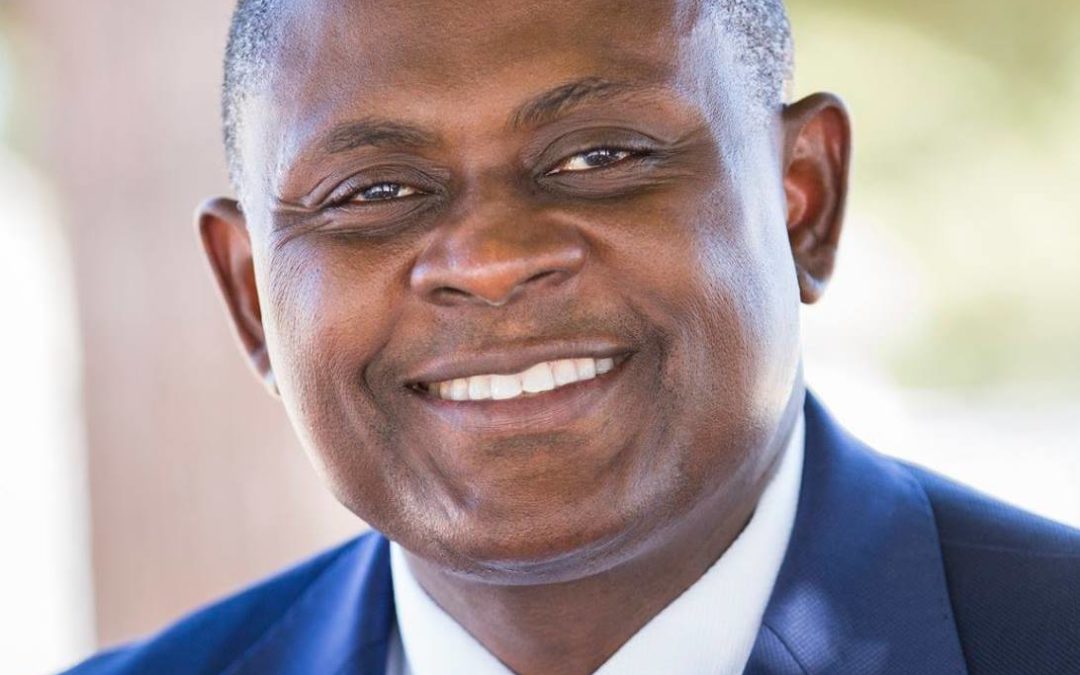
What’s the connection? I had the privilege two years ago of meeting a true hero: Dr. Bennet Omalu. He was the keynoter at the Head Injury Association’s Awareness Sports Forum at the Hyatt Regency Long Island.
In 2002 Dr. Omalu discovered the presence of degenerative disease in the brain of National Football League player Mike Webster. He named the brain disease chronic traumatic encephalopathy, known as CTE. His discovery has proven to be a powerful pebble that has generated waves throughout the troubled waters of youth, college and professional football, as well as other contact sports.
Dr. Omalu was portrayed by Will Smith in the 2015 film Concussion, based on his book of the same name. Prior to that, he was prominently featured in the public affairs television program Frontline and in the book, League of Denial: The NFL, Concussions and the Battle for Truth.
Although the focus of the head injury forum was to raise awareness to protect school-aged athletes from concussions, Dr. Omalu transcended his role as a forensic scientist, inspiring an audience of several hundred people with his deep faith and fortitude.
He began his remarks by recalling that he was born in war-torn Nigeria and describing how he suffered as a child from malnutrition. He revealed that, “Because of the consequences of war, I became a weakling and introvert who was ridiculed.”
The turning point in his life came, he remembered, when he realized that “with knowledge you can do all things.” This realization ignited what became a lifetime thirst for learning and quest for truth. In fact, he has earned eight degrees and certifications.
Dr. Omalu explained that both science and faith seek truth. The role of faith, he said, “is the manifestation of things we do not see,” which was the case with Mike Webster and the rest of the world. Dr. Omalu said that it was his deep faith in humanity that led him to wonder about the cause of Webster’s destitution, deterioration and death, and, to “speak” to Webster’s spirit during the autopsy.
“Whatever happens to the least of us happens to all of us,” he told the rapt audience in Hauppauge; and, “what we do for the least of us, we do for all of us.” And, so began his spiritual relationship with the deceased Mike Webster.
Omalu has faced enormous obstacles as a scientist. He shared that he was smeared by the National Institute of Health, which said he was not a reputable doctor. And he was also defamed by the NFL, which did all they could to stonewall his discovery and disassociate the notion that repeated blows to the head were the cause of a degenerative brain disease that led to the premature deaths, including suicides, of scores of former players and counting.
Dr. Omalu spoke to the challenge of working in a context of “conformational intelligence” which he explained as when one’s “mind conforms to the expectations of society” and not necessarily the truth. “How does conformational intelligence hold down a society?” he asked.
This amazing man—who portrayed himself as an “outlier,” someone who operates outside of the box—concluded his remarks by stating, “One person can ignite a fire that can light the entire forest.”
We owe Dr. Omalu a debt of gratitude for his discovery and for his quest for truth, against all odds.
We must demand that those in power in youth, interscholastic and intercollegiate sports protect our children; and we must help our children, from an early age, to think critically and to develop the good sense and courage, without shame, to speak the truth and break the silence.
Bio: Andrew Malekoff is the Executive Director of North Shore Child & Family Guidance Center, which provides comprehensive mental health services for children from birth through 24 and their families. To find out more, visit www.northshorechildguidance.org

by North Shore Child & Family Guidance Center | Jan 25, 2018 | Blog
BY CAROL IRIZARRY
The following is an excerpt from a new book edited by our Executive Director, Andrew Malekoff, called Group Work Stories Celebrating Diversity. To learn more about the book or to purchase it, click here. This story was written by Carol Irizarry.
Edie was only 12 years old and had the deepest, most delicate brown eyes that I had ever seen. We sat by the pool on the last day that I would spend with my group, both of us feeling sad and not speaking. I felt tears on my arm and realized that she was crying. Her voice was hesitant and soft but it cut directly into my heart. “Please Carol, just don’t forget us.”
How could this beautiful young Puerto Rican girl possibly know that during all the years since that moment I could not think of this scene without tears coming to my eyes? Forget her, forget the Watusi girls? Never. They changed me forever.
I had just graduated with my MSW in group work and this was my first job, my first pay check, my first professional role, my first apartment with friends in New York City and my first group. Preadolescent girls, from Hispanic and African-American backgrounds, asking for help from the settlement house to form a club, which they wanted to call the “Watusi” girls.
They were suspicious when I was “assigned” to them and with good reason. I was green. Naive about New York City life and the issues which these girls encountered on a daily basis. Naïve also about myself and my role as a social group worker. So they went to work on me – imitating my every gesture – my walk, my talk and my gestures. Mocking Carol was their favourite game. “It’s only a joke,” the president reassured me. “We do that with everyone.”
I took the turn towards humour and instead of reprimand l laughed with them at my silly self. It broke the ice.
Subway rides were a nightmare as the girls made rude comments to the other passengers. They were kicked off and I left with them. Then the rebukes started as we walked back in disappointment at the missed trip. “You should have stopped us from being bad on the subway.” I replied, “You hate people who tell you what to do and I am not a teacher after all. I am a social worker.” Confusion emerged but now they listened seeing me in a different light. This was how talking together began. Boys were top conversational subjects but school, jobs, parental controls, sex and fear of pregnancies all spilled out.
Their insights into their situations were amazing. They taught me how they survived with talents such as reading people’s real intentions and trusting their own instincts. They showed me their resilience, which was often based on getting up again after being knocked down, literally or symbolically.
Above all I discovered how the girls relied on each other for protection and emotional well-being. They displayed a loyalty to their Watusi club that surprised me in its commitment and depth. The fought each other with the same intensity and punished those who did not remain loyal but they looked out for each other in all situations – another major component of their resilience. And they never tired of teaching me something more about groups and my interactions.
They challenged me to be more real, not to evade, not to hide behind professional language, not to hedge my opinions and most importantly to integrate my professional and personal roles. They could see through any phony response in five seconds flat. Their questions were incessant. Did I like really them? Would I lend them money? Where did l learn Spanish? Would I take a girl home if her mother died? Did I have a boyfriend? Did I have Puerto Rican friends? Did I have Black friends? And eventually – best of all, what did a social worker do anyway?
I struggled with answering their concerns while staying within my professional role. Each question challenged me to stay true to my reason for being a social group worker and at the same time to give them an answer that displayed my genuineness, revealing myself as a real person. It was only in answering these questions directly that they began to move into more threatening subjects and raise their encounters around race and prejudice which they had all experienced. My immediate reactions were always crucial – the pain I felt at their stories – the anger at their hurts. They needed those emotions and it helped them to view my unadulterated reactions. They also felt conflicted since it was so easy to see “white crackers” as alien and feared, while liking me placed them in peril. The taboo subject of race emerged more frequently and I needed to help them sort out the conflict rather than suggest solutions and I needed to avoid being defensive when I was labelled as one of the white oppressors. I kept reminding myself to focus on their needs not mine, on why they had wanted to form a group and what it meant to their lives.
As for the individual Watusi girls, I stood in awe of their strength and their ability to find ways to live creative lives within their environment. They were powerful girls – rich in character, energy, humour and resolve. I shared in their adventures and challenges. And I fell in love with them.
I learned social work. I learned group work. I learned about myself and I gave myself to these girls with whom I walked the streets of New York. These were the same girls who teased me mercilessly until the day I left, who cried on my shoulder about family problems and fights with friends, who called me “white cracker” and then threw their arms around me when I came back from a holiday. They were the same girls who all slept touching me, with every single girl holding onto a part of me when we camped on Bear Mountain and slept outside. Tough on the streets of East Harlem, but afraid of a dark night without streetlights.
I see their faces clearly and vividly. Edie, Elba, Cuni, Maria, Norma, Shirley, Brenda, Naomi and Miranda. I mix up their real names with the code names that I gave them in writing and talking about them over the decades but their faces remain young, vibrant and distinct before me now – years after they would have grown to be mothers and grandmothers.
“No Edie” I replied, “I will never forget you. And I never have. You showed me strength and vulnerability – and gave me trust and affection. You came with the other girls to my wedding. Still a group but with your new worker and I saw your beaming faces as a precious part of that celebration – a gift of lasting influence, frozen in the picture frames.
You and your friends moulded me and sculptured me into the social worker that I became and remained. It was through working with you and the other Watusi girls that the words I had read in textbooks transformed in actions in the real world. And I learned that all the social work theories, skills, techniques, ideas and insights however relevant, must be carried out through a genuineness of self and a feeling of true affection. The most challenging skill of all is to be real and professional at the same time and to hold that delicate balance.
I close my eyes and I can feel again Edie’s tears on my arm as she sits by the pool. I wish I could tell her and the other Watusi girls of their effect on my development and my gratitude for the social group work they taught me. “No Edie I have never forgotten you and I never will.”
